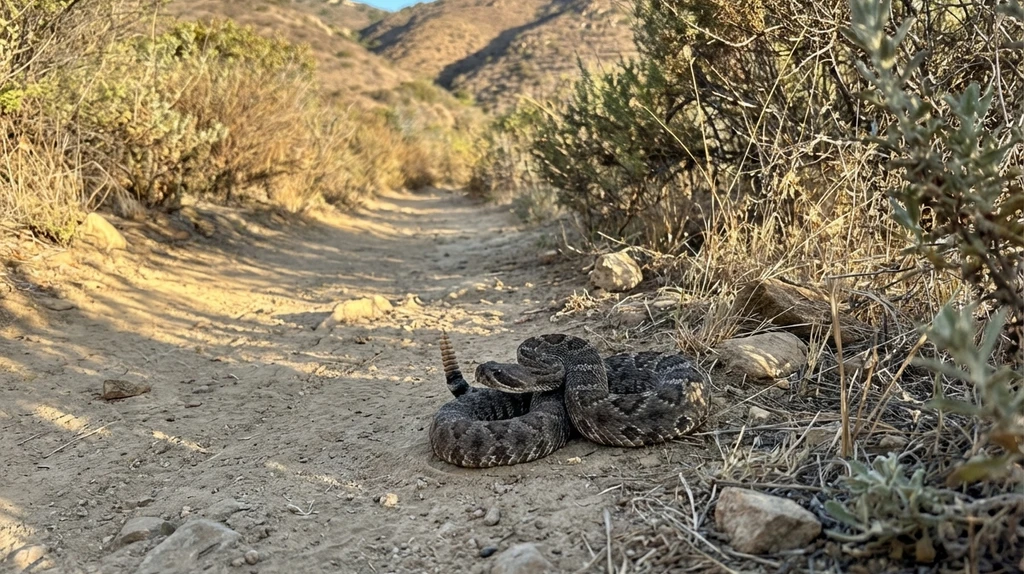
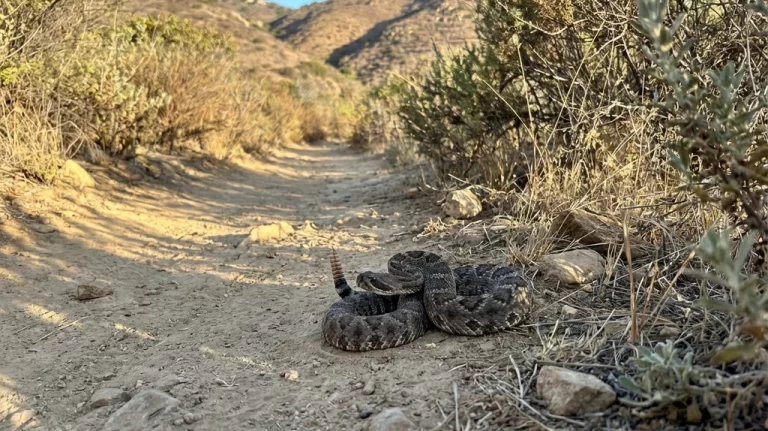
Every spring, San Diego’s hiking trails come alive with wildflowers, perfect weather, and the one thing nobody wants to step on — rattlesnakes. If you’ve lived here long enough, you’ve either seen one on the trail, heard the rattle from way too close, or know someone who has a story. Rattlesnake season in San Diego isn’t just a vague warning on a trailhead sign. It’s a real thing, and if you hike, walk your dog, or have a yard that backs up to a canyon, you need to know what you’re dealing with.
Here’s everything you need to know — which snakes actually live here, where you’re most likely to encounter them, what to do (and absolutely not do) if someone gets bitten, and how to keep your dog safe.
Table of Contents
When Is Rattlesnake Season in San Diego?
Technically? Year-round. San Diego’s mild winters mean rattlesnakes never fully hibernate the way they do in colder climates. But the real season — when sightings spike and your chances of encountering one jump dramatically — runs from March through October, with peak activity in April, May, and June.
That’s when snakes come out of their winter slow period to bask in the sun, hunt, and mate. Early spring is actually the most dangerous time because the snakes are hungry after months of low activity, and hikers are flooding the trails after being cooped up all winter. It’s a bad combination.
Here’s what makes it tricky: warm weather in February or early March can trigger early emergence. In February 2026, San Diego snake relocation services reported more than double the calls compared to the same month the year before — 43 calls versus 18 — because unseasonably warm temps woke the snakes up early. So “rattlesnake season starts in April” isn’t a rule you can rely on anymore.
San Diego’s Rattlesnake Species
San Diego County is home to four confirmed rattlesnake species. Knowing what you’re looking at matters, because they have different habits and habitats.
Southern Pacific Rattlesnake
This is the one you’re most likely to encounter. The Southern Pacific rattlesnake is the most common species in San Diego County and the snake responsible for the vast majority of trail encounters. They range in color from gray to greenish-gray to almost black, with dark blotches along their body. You’ll find them everywhere — hiking trails, parks, canyon edges, and yes, occasionally backyards. They’re adaptable and comfortable living near human development, which is why they’re the species most likely to surprise you.
Red Diamond Rattlesnake
San Diego’s largest rattlesnake species, the Red Diamond can grow up to five feet long. They have a distinctive ruddy or brick-red body with white diamond patterning and black-and-white rings just above the rattle — they’re actually beautiful if you can appreciate them from a safe distance. Red Diamonds prefer chaparral, dense cacti, and rocky boulder fields. They’re a species of special concern in California, with their range mostly limited to San Diego and Riverside Counties. If you hike in the backcountry around Escondido, Ramona, or the eastern foothills, these are the big ones you might see.
Southwestern Speckled Rattlesnake
The shy one. Speckled rattlesnakes are less commonly seen because they prefer remote, rocky inland habitats and are masters of camouflage — their coloration varies to match their surroundings, making them nearly invisible against granite boulders. You’re unlikely to encounter one on a busy trail, but if you’re scrambling through rocky terrain in the backcountry, stay alert.
Colorado Desert Sidewinder
Found exclusively in the deserts of eastern San Diego County (think Anza-Borrego), the sidewinder is smaller — around two and a half feet — and famous for its unique sideways locomotion across hot sand. If you’re exploring the desert, watch for the distinctive S-shaped tracks in the sand.
Where You’re Most Likely to Encounter Rattlesnakes
Rattlesnakes can show up anywhere there’s undeveloped land, but certain San Diego trails and areas see significantly more encounters than others.
Mission Trails Regional Park is ground zero. Cowles Mountain — the most hiked peak in the county — sees rattlesnake sightings every spring like clockwork. The trail is wide and well-maintained, but snakes bask on the edges and cross the path regularly, especially in the morning. The broader Mission Trails park, including the visitor center loop and Oak Canyon, also has frequent sightings.
Iron Mountain in Poway is another hot spot. The trail passes through prime rattlesnake habitat — scrubby chaparral with plenty of rocky hiding spots. There have been bite incidents on this trail.
Torrey Pines has a smaller population, but sightings happen, sometimes even in winter on warm days. The coastal sage scrub habitat is home to Southern Pacific rattlesnakes.
Other high-encounter areas include Los Peñasquitos Canyon, Black Mountain Open Space, Tecolote Canyon, and basically any trail that borders a canyon in the suburbs. If your neighborhood backs up to undeveloped land, rattlesnakes can and do venture into yards, especially during mating season.
Trail Safety: How to Avoid an Encounter
The good news: rattlesnakes don’t want anything to do with you. They’re not aggressive. They bite humans only as a last resort when they feel trapped or threatened. Most encounters end with the snake slithering away — if you give it the chance.
- Stay on the trail. This is rule number one. Rattlesnakes love to hide in tall grass, brush, and rock piles just off the path. Step where you can see.
- Watch where you step and sit. Before stepping over a log, look on the other side. Before sitting on a rock, check around it. Snakes love shaded spots under ledges and overhangs.
- Wear proper footwear. Hiking boots and long pants won’t make you snakeproof, but they’re significantly better than flip-flops. (Yes, people hike Cowles in flip-flops. Don’t be those people.)
- Hike during midday in hot weather. Snakes are most active in the early morning, late afternoon, and evening when it’s cooler. During peak summer heat, they hide in shade — which also means watch where you reach for shade yourself.
- Listen. That distinctive rattle is a warning — the snake is telling you it’s there. If you hear it, freeze, locate the snake visually, then slowly back away. Don’t jump or run.
- Give them space. If you see a snake on the trail, give it at least 6 feet of clearance. They can strike up to half their body length, which for a 4-foot snake means a 2-foot strike zone. Just walk around it.
- Never, ever try to handle one. This should be obvious, but a significant percentage of rattlesnake bites happen to people who were trying to pick up, move, or photograph a snake up close. The Instagram photo isn’t worth the ER bill.
If You Get Bitten: What to Do (and What Not to Do)
First — stay calm. Easier said than done when you’re looking at fang marks on your ankle, but panic increases your heart rate and spreads venom faster. Rattlesnake bites are rarely fatal with proper medical treatment, but you need to get to a hospital.
Do:
- Call 911 immediately
- Keep the bitten area below heart level if possible
- Remove rings, watches, and tight clothing near the bite — swelling comes fast
- Stay as still and calm as possible
- Try to remember the snake’s appearance (size, color) for the medical team
- Note the time of the bite
Do NOT:
- Cut the wound or try to suck out the venom (this is movie nonsense that causes more harm)
- Apply a tourniquet (this can lead to tissue death and amputation)
- Apply ice or cold water
- Take aspirin or ibuprofen (these thin blood and worsen bleeding)
- Try to catch or kill the snake
Treatment involves antivenom (typically CroFab or Anavip), and most ER departments in San Diego are equipped to handle it. If you’re not sure where to go, call Poison Control at 1-800-222-1222.
One thing nobody tells you about until it happens: the cost. A single vial of antivenom ranges from $2,500 to $15,000, and severe bites can require 20+ vials. Total treatment bills of $100,000 to $200,000 are not uncommon, and one San Diego toddler’s treatment famously hit nearly $300,000. Check your insurance coverage before snake season — it’s one of those things you hope you never need but absolutely need to have.
Dogs and Rattlesnakes: A Serious Risk
If you hike with your dog, rattlesnake awareness isn’t optional — it’s critical. Dogs are naturally curious, and their instinct is to investigate (read: stick their nose directly into) anything new on the trail. A rattlesnake strike to a dog’s face or leg can be fatal, especially for smaller breeds.
Keep your dog on a leash. Always. Even if they have great recall. A dog off-leash in rattlesnake country is a dog one nose-boop away from an emergency vet visit.
Rattlesnake avoidance training is worth every penny. Multiple trainers in San Diego offer classes that teach dogs to recognize and avoid rattlesnakes. Good Dog Training School in Ramona and Poway runs regular clinics ($150/dog), and High On Kennels offers sessions in Lakeside and Alpine. The training uses controlled exposure to teach dogs to associate the sight, sound, and smell of rattlesnakes with “nope, hard pass.” It works, and it can save your dog’s life.
Know the symptoms of a snakebite in dogs: sudden yelping or limping, swelling at the bite site (often the face or legs), excessive drooling, lethargy, or difficulty breathing. If you suspect your dog has been bitten, get to an emergency vet immediately. Time matters — don’t wait to see if the swelling goes down.
There is a rattlesnake vaccine for dogs (Crotalus Atrox Toxoid) that may reduce the severity of symptoms from certain bites. Talk to your vet about whether it’s right for your dog — it’s not a guarantee, but it can buy you extra time to get to the ER.
Rattlesnake in Your Yard? Here’s What to Do
If you live near a canyon, open space, or anywhere with native vegetation (so… most of San Diego), a rattlesnake may eventually visit your property. Don’t panic, and definitely don’t try to handle it yourself.
- Keep your distance — at least 10 feet. Bring kids and pets inside.
- Call a professional relocation service. The Snake Wranglers (619-204-5117) are a donation-based group that safely catches and relocates snakes across San Diego County. So-Cal Rattlesnake Removal (619-259-7121) offers 24/7 emergency service. Danger Noodle Project (720-231-6014) covers North County.
- Do not kill the snake. Rattlesnakes are protected in California and play an important role in controlling rodent populations. Plus, a dead rattlesnake can still bite via reflex for up to an hour after death. Just call the professionals.
To reduce the chances of snakes visiting in the first place: keep your yard clean of debris and woodpiles, trim bushes away from the house, seal gaps under fences and doors, and control rodent populations (where there are mice, there are snakes hunting mice).
Living With Rattlesnakes
Here’s the thing San Diego old-timers understand that newer residents sometimes don’t: rattlesnakes were here first. We built our neighborhoods in their habitat, not the other way around. They’re not invading — they’re just… still here. And they do important work: a single rattlesnake can eat dozens of rodents per year, keeping populations in check that would otherwise wreck your garden and chew through your car wires.
Respect them, give them space, know what to do if things go sideways, and you’ll be fine. Millions of people hike San Diego’s trails every year, and actual bites are rare. The snakes want to avoid you just as much as you want to avoid them — they’re just not great at communicating that to your nervous system when they rattle at you from three feet away.
Stay on the trail. Watch your step. Leash your dog. And enjoy the hike. 🐍